Every staircase we build passes through one facility in Broomall, PA. It’s within this 150,000 sqft space where every step of the process from design and engineering to machining, welding, fabrication, and finishing stays in-house. We've invested in the technology to...
America’s architecture is as diverse as the landscapes, climates, and communities found across the country. From adobe-inspired homes in the Southwest to wood-filled retreats in the Pacific Northwest and industrial lofts in major cities, American regional design...
When you are designing an outdoor staircase, choosing the right tread material is just as important as selecting the staircase itself. Outdoor stairs are continuously exposed to rain, sunlight, temperature changes and everyday foot traffic, so the materials need to...
One of the most common questions homeowners ask when planning a renovation or new construction project is simple: How much space does a spiral staircase actually require?
The answer surprises many people. Compared to traditional staircases, a spiral staircase can fit into a remarkably small footprint while still providing safe, comfortable access between levels. Whether you’re adding access to a loft, creating a connection between floors, upgrading a deck, or improving pool access, understanding the space requirements can help you determine if a spiral staircase is the right solution for your home.
Why Spiral Staircases Save Space
Traditional staircases require a significant amount of floor space because they run horizontally as they rise. Depending on building codes and design requirements, a standard staircase can consume 100 square feet or more of valuable living space.
A spiral staircase, on the other hand, rises vertically around a central column. Because the design wraps around itself, it dramatically reduces the amount of floor space needed.
This compact design makes spiral staircases ideal for:
Lofts and mezzanines
Basements
Attics
Small homes
Multi-level decks
Pool access
Garages and workshops
Tiny homes and vacation properties
In many cases, homeowners choose a spiral staircase specifically because a traditional staircase simply will not fit.
What Is the Minimum Space Required?
The exact amount of space depends on the diameter of the staircase you choose.
Most residential metal spiral staircases are available in diameters ranging from 3 feet 6 inches to 6 feet.
Here is a general guideline:
● 3’6″ diameter staircase requires approximately a 44-inch square opening
● 4′ diameter staircase requires approximately a 50-inch square opening
● 5’diameter staircase requires approximately a 62-inch square opening
● 6′ diameter staircase requires approximately a 74-inch square opening
A smaller diameter staircase may fit the available space, but larger diameters typically provide more comfortable walking room and easier movement between levels.
For outdoor applications, homeowners often choose larger diameters to accommodate frequent use and improve overall accessibility.
Indoor Space Planning Considerations
While floor space is important, it is not the only measurement to consider.
When planning an indoor installation, you should also account for:
Ceiling Height
The distance between floors determines the number of treads and the overall rise of the staircase. Proper headroom is essential to ensure users can comfortably walk up and down the stairs.
Landing Areas
Both the top and bottom of the staircase should have adequate clearance. This allows people to enter and exit the staircase safely without feeling cramped.
Furniture and Traffic Flow
Think about how people move through the space. A spiral staircase should enhance the lay
out rather than create obstacles. Many homeowners find that replacing a traditional staircase with a spiral staircase actually improves room flow and opens up additional usable square footage.
Outdoor Spiral Staircases and Deck Projects
Space savings become even more valuable outdoors.
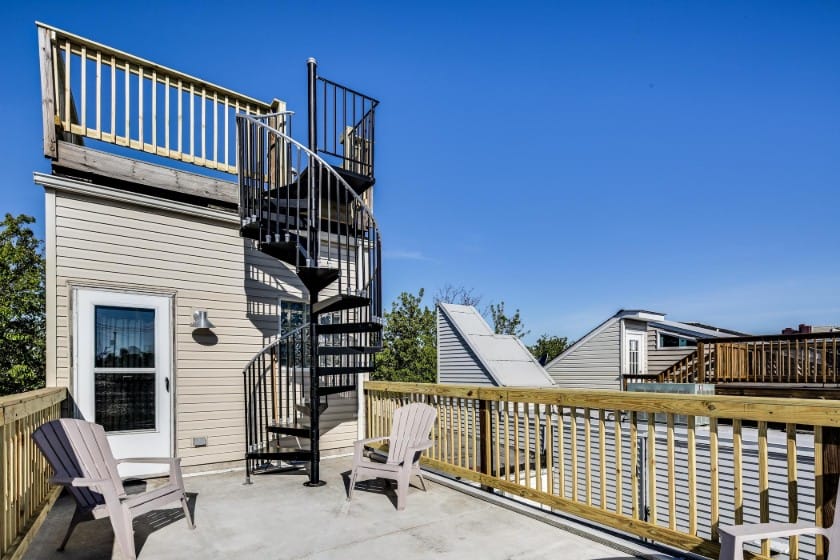
Homeowners adding multi-level decks, rooftop access, or pool areas often discover that a traditional staircase consumes a large portion of their outdoor living space. Installing an outdoor spiral staircase allows you to maintain more room for seating, landscaping, entertaining, and recreation.
Popular outdoor applications include:
Access between upper and lower decks
Pool deck entry points
Balcony connections
Lake house docks
Rooftop terraces
Backyard entertainment spaces
Because the staircase occupies a relatively small footprint, it allows homeowners to maximize every square foot of their outdoor environment.
Choosing the Right Size for Your Project
Bigger is not always better. The ideal diameter depends on how the staircase will be used.
For example:
Loft access may work well with a smaller staircase.
Primary living areas typically benefit from a larger diameter.
Outdoor entertaining spaces often call for a wider staircase to accommodate guests.
Commercial or high-traffic applications may require additional width and customization.
Working with experienced manufacturers helps ensure you select the correct size while meeting both functional and aesthetic goals.
Small Footprint, Big Impact
One of the biggest advantages of a spiral staircase is its ability to transform a space without consuming it. Whether you’re creating access to a loft, connecting multiple levels of a deck, or upgrading your home’s interior design, a spiral staircase delivers functionality and style while minimizing its footprint.
The amount of space you need may be less than you think. With diameters starting around 42 inches and customizable options available, many homeowners discover that a spiral staircase opens up possibilities they never considered.
If you’re evaluating a renovation or new construction project, now is the perfect time to explore how a custom spiral staircase, outdoor spiral staircase, or metal spiral staircase can help maximize your space while enhancing the overall look of your home.
It’s our President’s birthday—and we’re celebrating by giving you a little extra time! Lock in your 2026 pricing for up to 6 months, by ordering now thru November 25, 2026.* Request Your Quote