Spring break is the unofficial kickoff to rental season. Guests are booking flights. Families are planning long weekends. Couples are escaping cold weather. Friend groups are splitting a house for “core memory” trips. And if you own a vacation rental, lake house,...
If you live in the Northeast, late winter can feel endless. Snow lingers, yards stay soggy, and outdoor projects seem months away. But spring really is around the corner, and now is the perfect time to start planning your exterior improvements before peak season hits....
Planning a Spiral Staircase Installation the Right Way Installing a spiral staircase requires thoughtful preparation. While spiral staircases are known for their space saving design and architectural appeal, careful planning ensures your investment performs safely and...
Winter has a way of quietly beating up your outdoor spaces. Snow piles up, ice forms and melts, temperatures swing up and down, and all that moisture settles into places you probably never think about. By the time spring finally rolls around, your deck and outdoor stairs have been through a lot.
The tricky part is that most of the damage happens slowly and out of sight. Everything might look fine at first glance, but winter can loosen connections, shift boards, and stress materials in ways that aren’t obvious right away.
Before you start enjoying those warmer days on your deck again, it’s worth doing a quick walk-around to see how your outdoor stairs and deck handled the cold months.
The Freeze–Thaw Cycle Does More Damage Than You Think
One of winter’s biggest troublemakers is the freeze–thaw cycle. Snow melts during the day, water seeps into tiny cracks and seams, and then temperatures drop overnight. That water freezes and expands, which slowly pushes materials apart.
This cycle repeats itself over and over throughout winter.
For wooden decks, that can lead to warped boards, cracking, or areas that feel slightly softer underfoot. It may also cause boards to shift just enough that you notice new gaps or uneven spots once spring arrives.
Outdoor stairs connected to the deck can feel this movement too. Even if everything looks fine visually, a quick stability check is always a good idea.
Snow and Ice Put Stress on Stair Hardware
If your outdoor stairs saw a lot of snow this winter, the weight alone can add stress to the structure. Add in ice buildup and repeated shoveling, and stair components may have taken more strain than usual.
Spring is the perfect time to check a few key areas:
Stair treads for looseness or movement • Railings to make sure they still feel solid • Bolts or connection points that may have shifted slightly
Walk the stair normally and pay attention to any subtle changes in sound or movement. A small creak or shift can sometimes be the first sign that something has loosened over time.
Nothing dramatic usually happens overnight, but small movements over several months can make stairs feel less stable than they used to.
Catching those little issues early helps keep everything safe and sturdy.
Your Deck Surface May Have Shifted
Temperature swings can also cause deck materials to expand and contract repeatedly. Over time, that movement can create subtle changes in the deck surface.
You might notice:
Deck boards that no longer sit perfectly flat • Slightly wider gaps between boards • Minor shifting where the stairs attach to the deck
The area where your outdoor stairs connect to the deck is especially important to check. It carries a lot of daily traffic and weight, so you want to make sure everything still feels secure.
Railings Deserve a Quick Test
Deck and stair railings work hard year-round, especially in winter when people rely on them more during icy conditions.
Moisture and ice buildup can sometimes weaken mounting points or loosen hardware. The easiest way to check them is simple: give each railing section a gentle push.
Railings should feel solid and stable without any wobble. If something feels loose, tightening connections now is a quick fix that helps prevent bigger issues later.
Keep an Eye Out for Rust or Corrosion
Outdoor hardware spends the entire winter exposed to snow, moisture, and sometimes road salt. Over time, that can lead to rust forming around older non-stainless components such as screws, bolts, or fasteners.
Modern outdoor stairs typically use stainless hardware that is much more resistant to corrosion, so this type of rust is usually something you would see on older stair installations.
Look for:
Rust spots around hardware • Discoloration near connection points • Bolts that appear worn or weakened
If you catch corrosion early, replacing a few pieces of hardware is an easy way to keep your deck and stairs in great shape.
A Good Time to Refresh Aging Stairs
Spring inspections sometimes reveal something else: your stairs may simply be showing their age.
If the structure is still solid but the surfaces or coverings look worn, it may be a good opportunity to refresh them. Replacing stair coverings or updating certain components can help older stairs look cleaner and feel safer without rebuilding the entire structure.
Some homeowners also take this opportunity to add new stairs to an existing deck layout or upgrade materials to something that requires less maintenance.
Small updates like these can make an aging deck feel refreshed without needing a full replacement.
Why Aluminum Outdoor Stairs Handle Winter So Well
If you’ve ever dealt with warped wood or constant seasonal maintenance, you already know how tough winter can be on traditional materials.
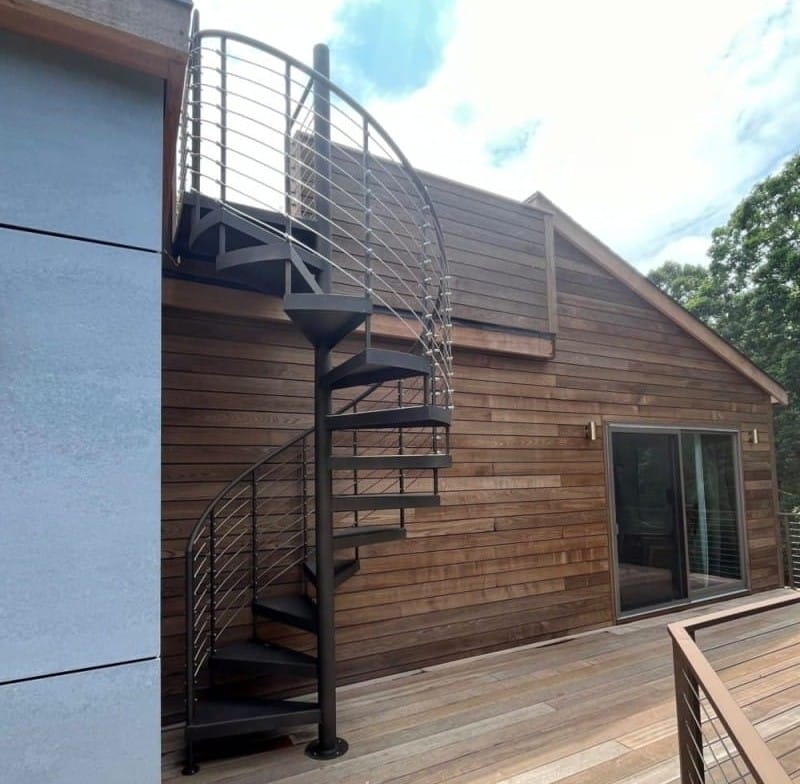
That’s one reason aluminum outdoor spiral stairs have become such a popular option for decks and patios. Aluminum doesn’t absorb moisture, so it won’t warp, rot, or swell during freeze–thaw cycles.
Outdoor stairs may be manufactured as a kit or fabricated as a single welded piece, but aluminum construction helps them maintain strength while staying lightweight.
The material also holds up extremely well against snow, ice, and temperature changes. Even after a long winter, aluminum stairs typically require very little maintenance beyond a simple inspection.
Because aluminum is both lightweight and strong, it maintains structural stability while staying easy to maintain season after season.
A Five-Minute Spring Check Goes a Long Way
The good news is you don’t need to spend hours inspecting your deck and stairs. Most of the time, a quick walk-around is all it takes.
When the weather warms up, take a few minutes to check:
Deck boards and walking surfaces • Stair treads and risers • Railing stability • Bolts and connection points • The connection point between the deck and stairs
If everything feels solid, you’re good to go for another season of backyard barbecues, morning coffee on the deck, and long summer evenings outside.
Your deck and outdoor stairs just survived months of snow, ice, and freezing temperatures. A quick check now helps make sure they’re ready for the much nicer weather ahead.